Child building a word with Montessori movable letters

PRE CASA

At 2½ years old, children are typically transitioning from the Toddler program into a Pre-Casa Montessori environment, ready to build greater independence, strengthen practical life skills and explore early academic concepts.

At Monarch Park Montessori, our Pre-Casa program supports this important stage in a warm, thoughtfully prepared environment designed for children aged 2½–4 years. Purposeful materials, meaningful choices and gentle guidance encourage children to become confident, active participants in their learning.

The Absorbent Mind

Dr. Maria Montessori described the young child’s remarkable capacity to learn from their surroundings as the “Absorbent Mind.” Much as a sponge absorbs water, children take in language, movement, habits and impressions through everyday experiences.

A young child’s acquisition of their home language offers a familiar example of this natural learning. Our classrooms build on this capacity through rich opportunities to observe, investigate and discover using all their senses.
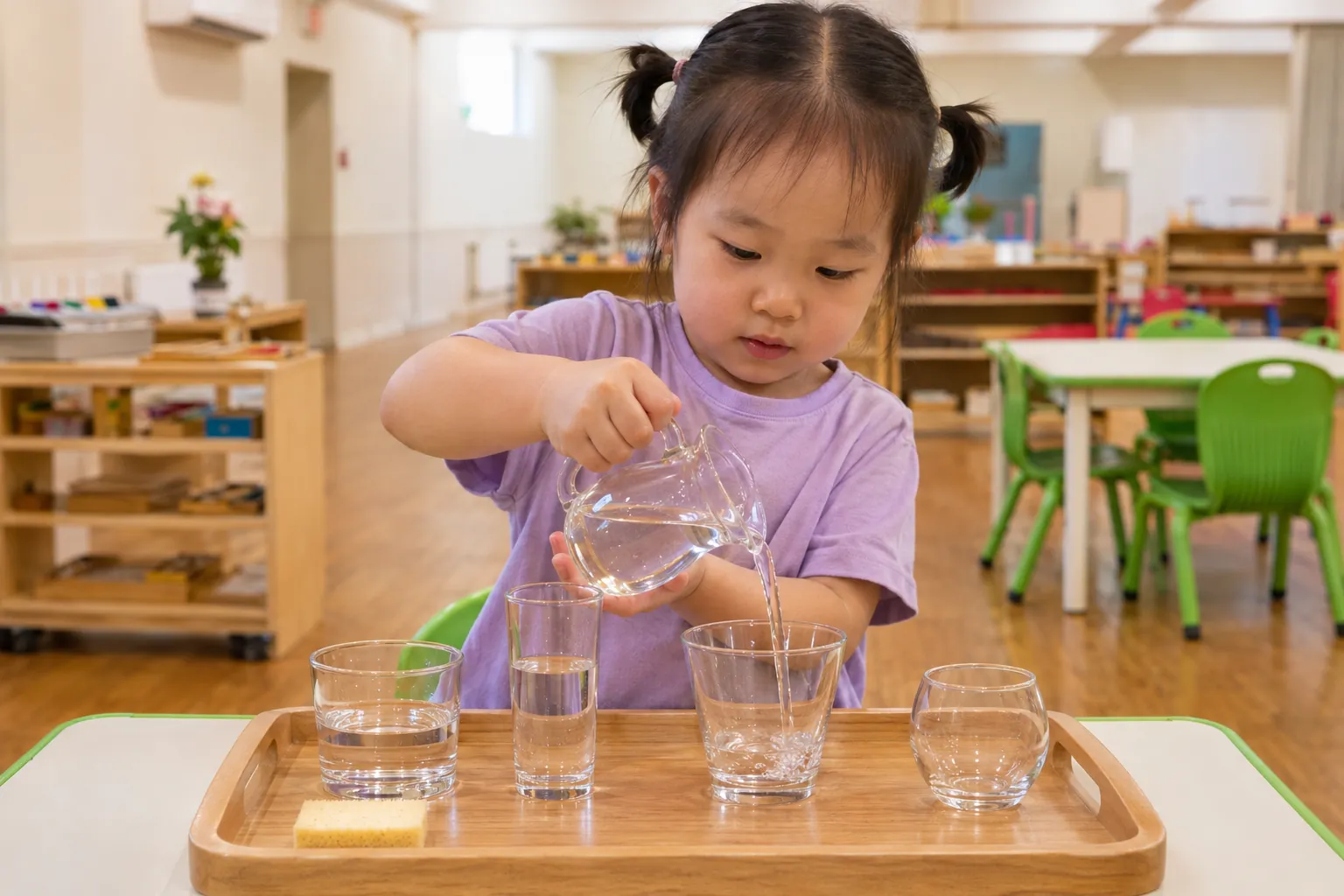
Practical Life

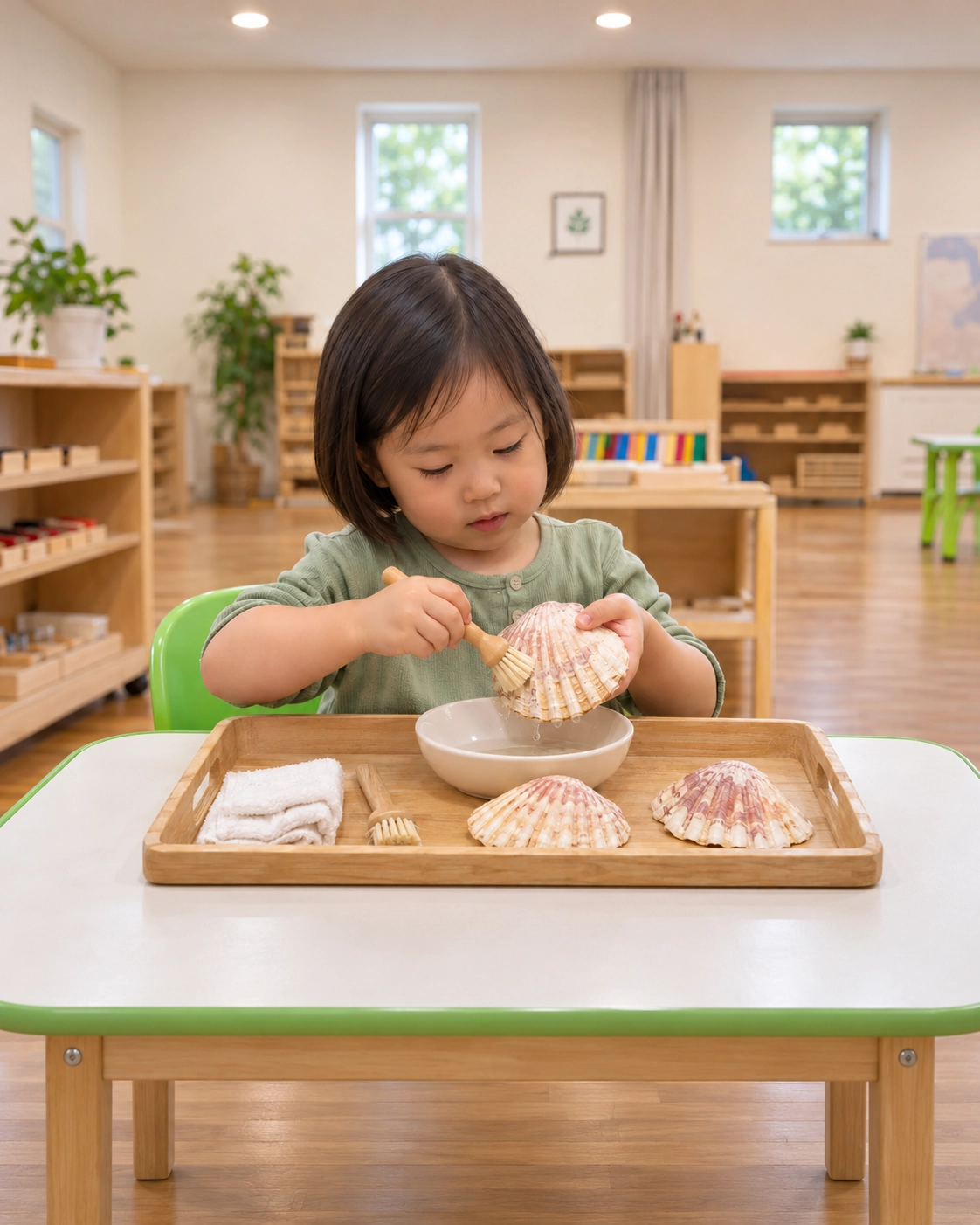
Practical Life activities respond to children’s growing desire to do things for themselves. Pouring, caring for plants, cleaning spills, setting a table, washing hands and working with dressing frames help children develop the skills to care for themselves and their surroundings.

Through repetition, children strengthen coordination, concentration, sequencing and control of movement. Completing a purposeful task brings a sense of accomplishment and builds confidence to approach new challenges.

Grace and courtesy are equally important. Children practise offering help, waiting for a turn, speaking respectfully and handling materials with care, learning how to contribute to their classroom community.

Sensorial Exploration

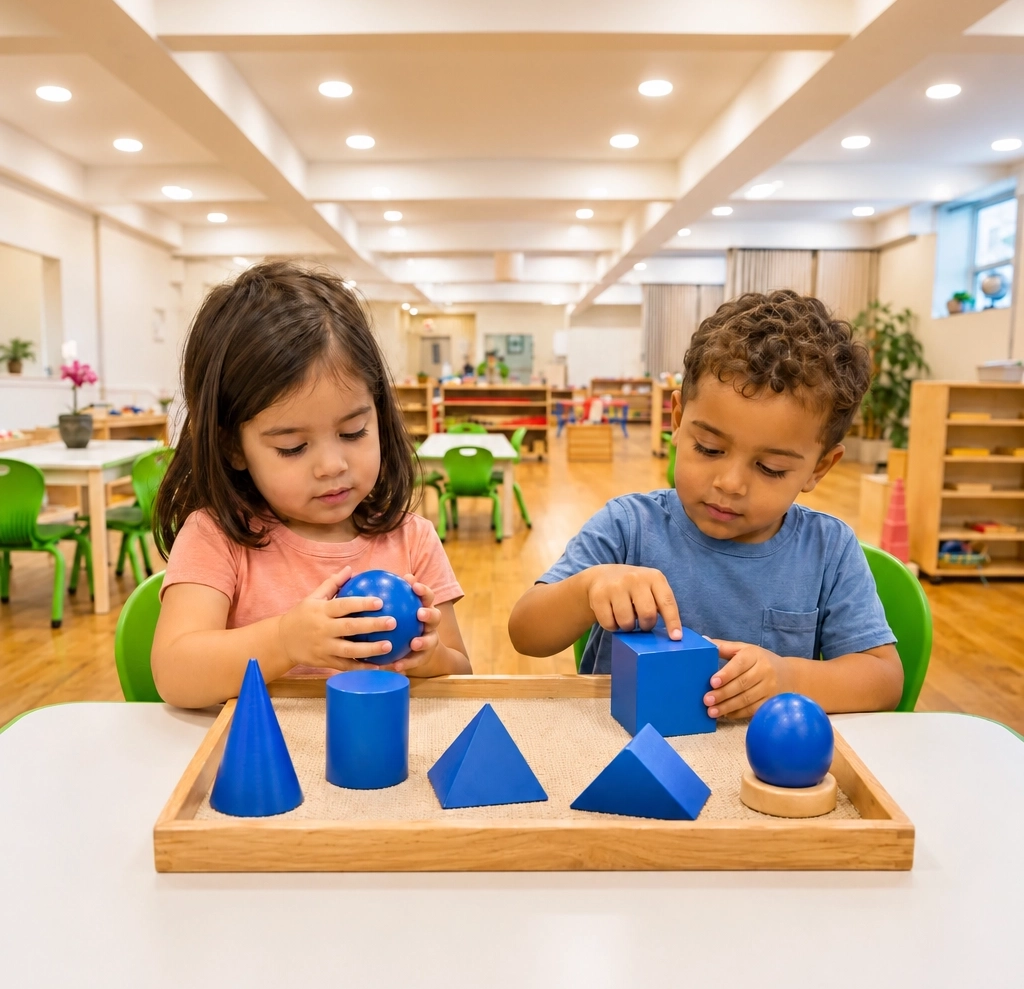
Sensorial materials help children organise and understand the many impressions they receive through their senses. By matching, sorting, comparing and grading, children explore qualities such as size, shape, colour, texture, weight and sound.

Materials such as the Pink Tower, cylinder blocks and colour tablets draw attention to specific qualities, helping children notice differences and recognise relationships. This purposeful exploration develops observation, reasoning and a sense of order while laying foundations for language and mathematics.

Child working with a wooden geography puzzle
Children reading and exploring a bright Montessori classroom
Children walking beside their classroom cubbies

Language

A language-rich environment encourages children to express their needs, share ideas and enjoy conversation. Stories, songs, poetry and vocabulary activities strengthen listening, understanding and clear communication.

As children become ready, sound games and sandpaper letters introduce connections between spoken sounds and written symbols. These hands-on experiences support early reading and writing foundations at a pace suited to each child.

Mathematics

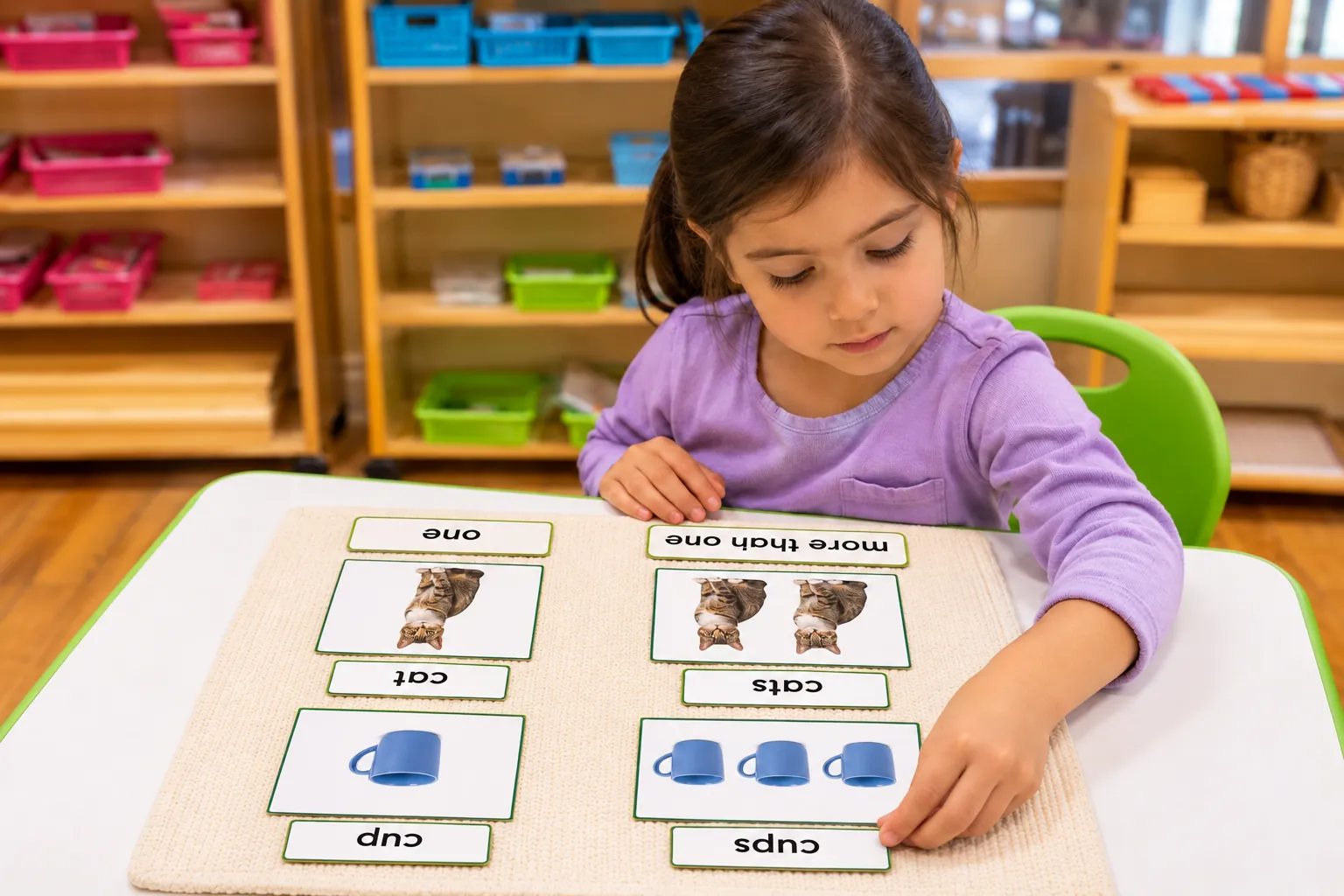
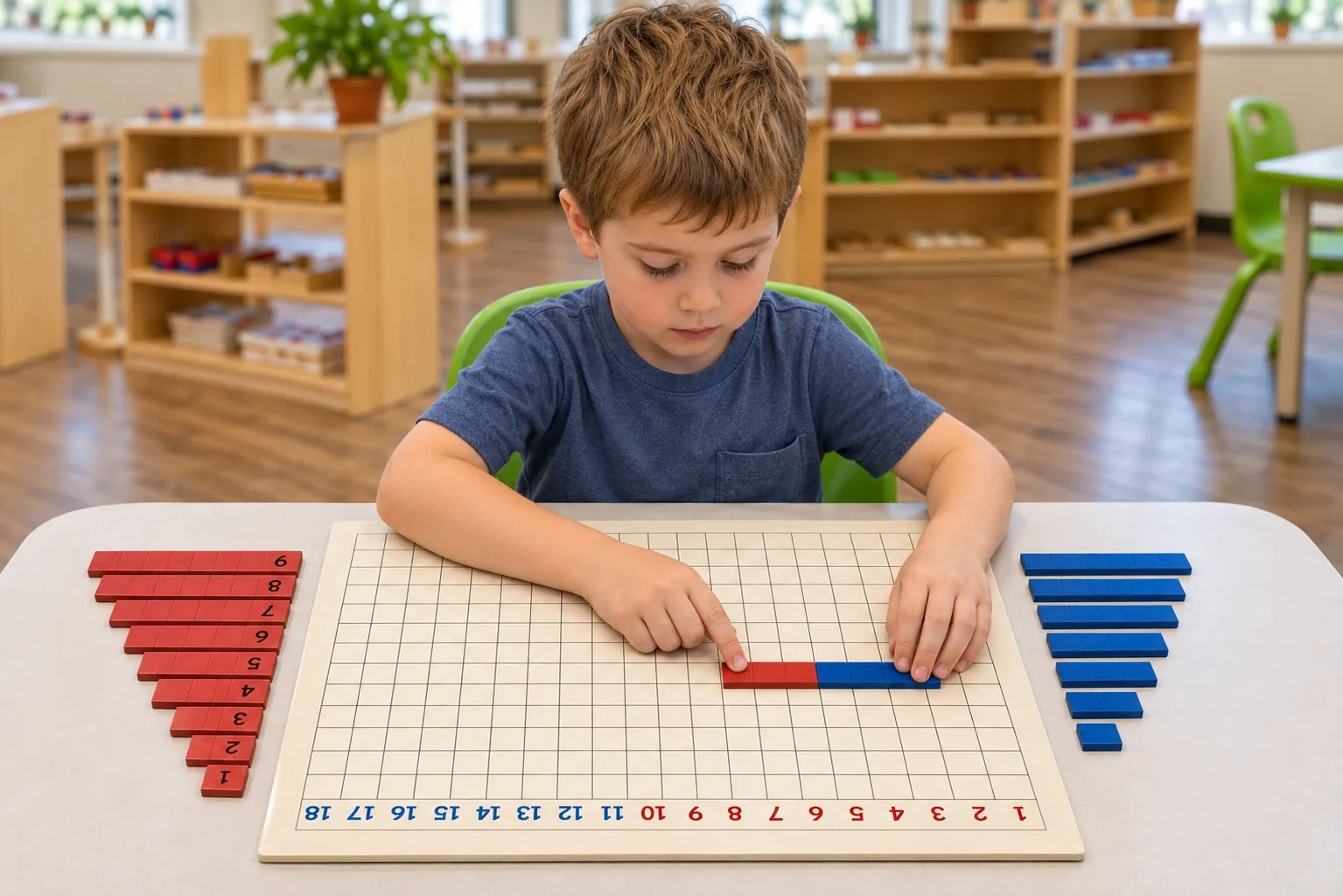
Montessori mathematics begins with concrete experiences that children can see, touch and explore. Counting objects, matching quantities to numerals and arranging materials in sequence help children build a meaningful understanding of number.

Rather than relying on memorisation alone, children discover mathematical relationships through purposeful work. Materials progress from simple to more complex concepts as understanding and confidence grow.

Culture, Geography & Science

Cultural studies invite children to discover the world and their place within it. Globes, puzzle maps, photographs and land and water forms introduce geographical ideas, while learning about different communities encourages curiosity and respect.

Explorations of plants, animals and everyday science develop careful observation and questioning. Caring for living things helps children build an appreciation for nature and a sense of responsibility for their environment. Art and music offer further opportunities to explore and express their understanding of the world.

Learning at Each Child’s Pace

Our educators observe each child’s interests and readiness, recognising periods when they are especially drawn to skills. Thoughtful lessons introduce new possibilities, while time to repeat, practise and discover allows understanding to deepen.

Through this balance of freedom, structure and responsive guidance, children develop independence, concentration and a strong foundation for the Casa years ahead.